Open the back door on the morning of the first snowfall and you may discover something about your Schnauzer. Some can’t wait to get outside and investigate this wonderful transformation of their garden. Others take one look at the snow, reconsider the urgency of their bathroom visit and turn around.
Whichever sort shares your home, a little preparation can make the colder months considerably more enjoyable for both of you.
From choosing a winter coat to dealing with those little balls of snow that collect in your Schnauzer’s leg furnishings, here are some things worth considering before winter settles in.
Does Your Schnauzer Really Need a Winter Coat?
Considering their German working heritage, you might expect Schnauzers to be reasonably well equipped for cold weather. All three breeds have a natural double coat consisting of a wiry outer layer and a softer undercoat.
But take a look at your Schnauzer the next time they return from the groomer. That beautifully clipped little body may not have quite the same protection as a longer, fuller coat.
Size makes a difference, too. Miniature Schnauzers have considerably less body mass than their Standard and Giant relatives, and their chests and bellies are closer to the snow. A freshly clipped Miniature may appreciate an extra layer on a cold morning, while a healthy, fully coated Giant enjoying an energetic walk might be perfectly comfortable without one.
| Schnauzer breed | Winter clothing considerations |
|---|---|
| Miniature | Often benefits from additional warmth in cold, windy or wet conditions. |
| Standard | Consider coat length, activity level and the conditions outdoors. |
| Giant | May tolerate the cold well with a full coat and regular activity, but can still benefit from protection in severe weather. |
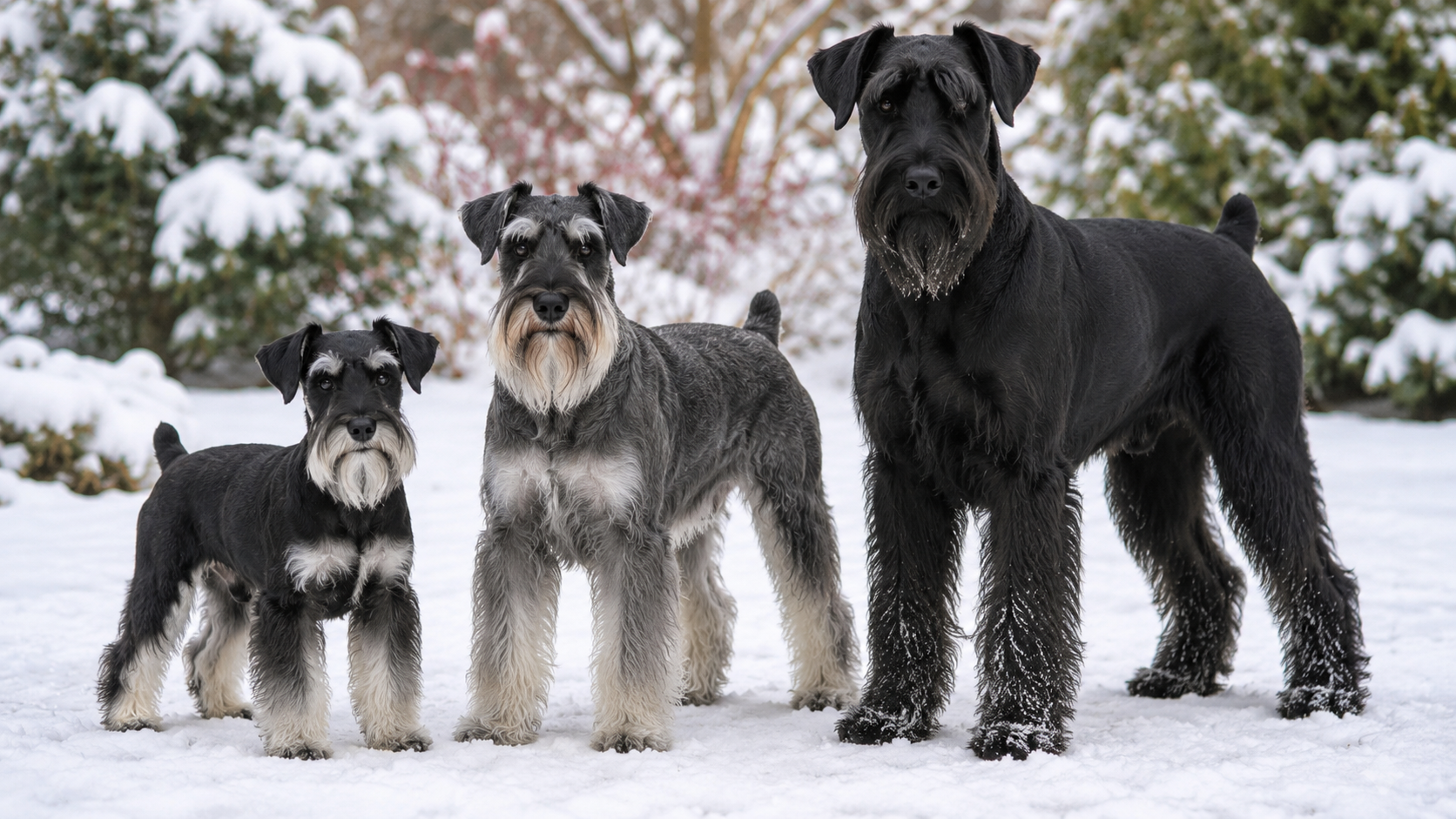
These are general considerations, not rules. Puppies, older dogs and those with certain health conditions may have more difficulty keeping warm, regardless of their size.
Watch your own dog rather than relying entirely on the thermometer. A damp, windy afternoon can be considerably less comfortable than a still, sunny day at the same temperature.
Choosing a Coat Your Schnauzer Will Actually Enjoy Wearing
A good winter coat doesn’t need to be particularly elaborate. It needs to fit properly, provide suitable protection and allow your Schnauzer to walk, run, sniff and attend to the usual outdoor business without interference.
A lightweight fleece may be sufficient for a chilly, dry day. An insulated jacket with a water-resistant outer layer is worth considering if you regularly encounter snow, sleet or biting winds.
When comparing winter coats, look for:
- Good coverage across the back and chest.
- Adjustable fastenings that allow a comfortable fit.
- Unrestricted movement around the shoulders and front legs.
- Easy access to the collar or harness.
- Fabric that’s reasonably easy to wash and dry.
Measure your Schnauzer’s chest circumference, neck and back length according to the manufacturer’s instructions. Don’t rely on a label that simply says small, medium or large. Sizing can differ considerably between manufacturers, and what fits one Miniature Schnauzer beautifully may be too narrow across the chest of another.
Introduce the coat indoors, allowing your dog to become accustomed to it before venturing outside. A few treats and a little encouragement can make the experience more pleasant.
A Little Extra Warmth for Winter Adventures
Whether you’re taking your Miniature Schnauzer around the neighborhood or heading out on a longer walk with your Standard or Giant, a well-fitting winter jacket can make cold-weather outings more comfortable.
Look for adjustable, insulated coats with good chest coverage and a size range suited to your dog.
Protect Those Busy Little Paws
Have you ever watched your Schnauzer suddenly stop in the middle of a winter walk and hold one paw in the air?
Sometimes a piece of ice has become lodged between the toes. On other occasions, the pavement may be uncomfortably cold, or the paw may have come into contact with road salt.
Schnauzers’ distinctive leg and foot furnishings can collect a surprising amount of snow. As the snow accumulates, it can form hard little clumps that pull on the hair and make walking uncomfortable. Keeping the hair between the paw pads neatly trimmed can help, so it’s worth mentioning this to your groomer during the winter months.
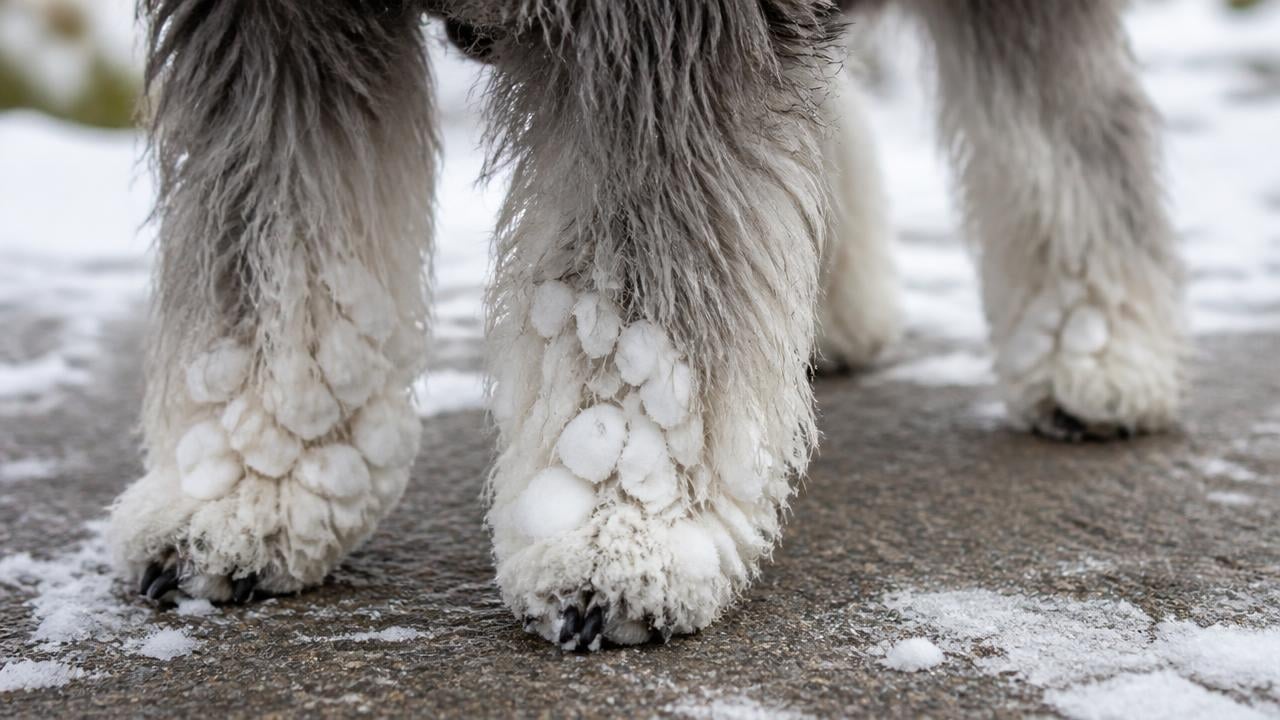
Road salt and chemical deicers present another problem. They can irritate the pads, and licking contaminated paws afterward may cause further trouble.
If your daily route takes you along heavily treated sidewalks, protective dog boots may be worth trying. A dog-safe paw protection balm can also be useful, particularly for dogs that won’t tolerate footwear, although it doesn’t provide the same physical barrier as a boot.
Will Your Schnauzer Wear Boots?
The first attempt at putting boots on a dog can provide considerable entertainment for everyone in the household except, perhaps, the dog.
That rather unusual high-stepping walk often improves as your Schnauzer becomes accustomed to the sensation. Start with brief sessions indoors, reward comfortable movement and gradually introduce short outdoor outings.
Boots should fit securely without constricting the foot or rubbing the skin. Measure the paws according to the manufacturer’s sizing guide, and remember that front and rear paws may require different sizes.
Check the fit after those first few walks. A boot that rotates, repeatedly falls off or causes your dog to walk awkwardly may need adjusting or replacing.
And if your Schnauzer remains thoroughly unimpressed by the idea of footwear, there are other ways to manage winter paw care.
Give Those Paws a Little Winter Protection
Snow, ice and treated sidewalks can make winter walks uncomfortable for your Schnauzer.
Properly fitted dog boots offer a physical barrier between the paws and the walking surface. A dog-safe paw balm is another option for everyday care, particularly when footwear isn’t practical.
Don’t Bring the Entire Snowdrift Indoors
The snow may look rather attractive on your Schnauzer’s beard and eyebrows, but there’s a good chance that considerably more of it is hiding underneath.
Keep an old towel near the door and take a moment to check the legs, belly and paws before your dog disappears into the living room. A small basin of lukewarm water is handy for rinsing away road salt and helping loosen stubborn ice.
Avoid pulling frozen clumps from the hair. Allow them to soften first, then gently work them free. Dry the paws thoroughly, paying attention to the spaces between the toes, and check for redness, cracks or anything that might be causing discomfort.
If you find yourself doing this several times a day, a suitably sized paw washer or an absorbent grooming towel may make the routine easier. But an ordinary bowl of water and a few washable towels will often do the job quite nicely.
Don’t forget the beard. Snow and moisture can collect around the mouth, particularly if your Schnauzer has been enthusiastically investigating every snowbank along the way.
Make Sure You’re Both Visible on Evening Walks
In summer, an after-dinner walk may mean enjoying the last of the sunshine. By midwinter, that same outing can take place in almost complete darkness.
Dark-coated Schnauzers can be particularly difficult to see against a poorly lit background. Even a salt-and-pepper dog may be hard for a driver or cyclist to distinguish at a distance.
A reflective dog harness is a useful addition to your walking equipment. Reflective material helps when illuminated by headlights or another light source, while a small LED collar light provides its own illumination.
The two serve slightly different purposes and can work well together.
Consider your own visibility, too. A reflective jacket or vest and a small flashlight can make it easier for others to see you while helping you spot icy patches before stepping onto them.
Whenever possible, choose a familiar, well-lit route and keep your Schnauzer securely leashed. Snowbanks can obstruct drivers’ views at intersections, and slippery surfaces leave less room for mistakes on everyone’s part.
When Is It Simply Too Cold for a Walk?
There will be days when your Schnauzer’s enthusiasm for getting outside exceeds your own judgment about the weather.
Rather than feeling obliged to complete your usual route, consider several shorter outings. This can be particularly helpful for older dogs, recently groomed Schnauzers and smaller dogs that become chilly quickly.
Watch for changes in your dog’s behavior:
- Persistent shivering.
- Repeatedly lifting the paws.
- Slowing down or reluctance to continue.
- Seeking shelter or trying to turn toward home.
- Unusual weakness or lethargy.
These are reasons to head indoors and reassess. Paw lifting, for example, may indicate irritation or an injury rather than a general problem with body temperature.
If your dog becomes unusually weak, confused, unresponsive or has difficulty breathing, seek emergency veterinary care. Frostbite and hypothermia are serious conditions, and suspected cases require prompt veterinary attention.
Keep your Schnauzer away from frozen ponds and lakes, and be particularly careful around driveways and garages where antifreeze may have spilled. Even a small amount of antifreeze containing ethylene glycol can be extremely dangerous. Suspected ingestion is a veterinary emergency; don’t wait for symptoms to appear.
A winter coat can help your dog stay comfortable, but it isn’t a reason to extend an outing in dangerous conditions.
Give That Busy Schnauzer Mind Something to Do Indoors
A few days of miserable weather can leave you with a Schnauzer who seems to have considerably more energy than the household knows what to do with.
This is where the breed’s working heritage becomes rather apparent. Many Schnauzers enjoy having something to investigate, solve or accomplish, and those opportunities don’t need to disappear just because the garden is covered in snow.
Hide a favorite toy somewhere in the living room and encourage your dog to find it. Practice a familiar training exercise or introduce a new one. Even something as simple as hiding a few pieces of kibble in safe, accessible places around a room can provide an interesting activity.
A suitably sized interactive dog puzzle toy can add variety to the routine. Choose one appropriate for your Schnauzer’s size and chewing habits, supervise its use and introduce more difficult puzzles gradually.
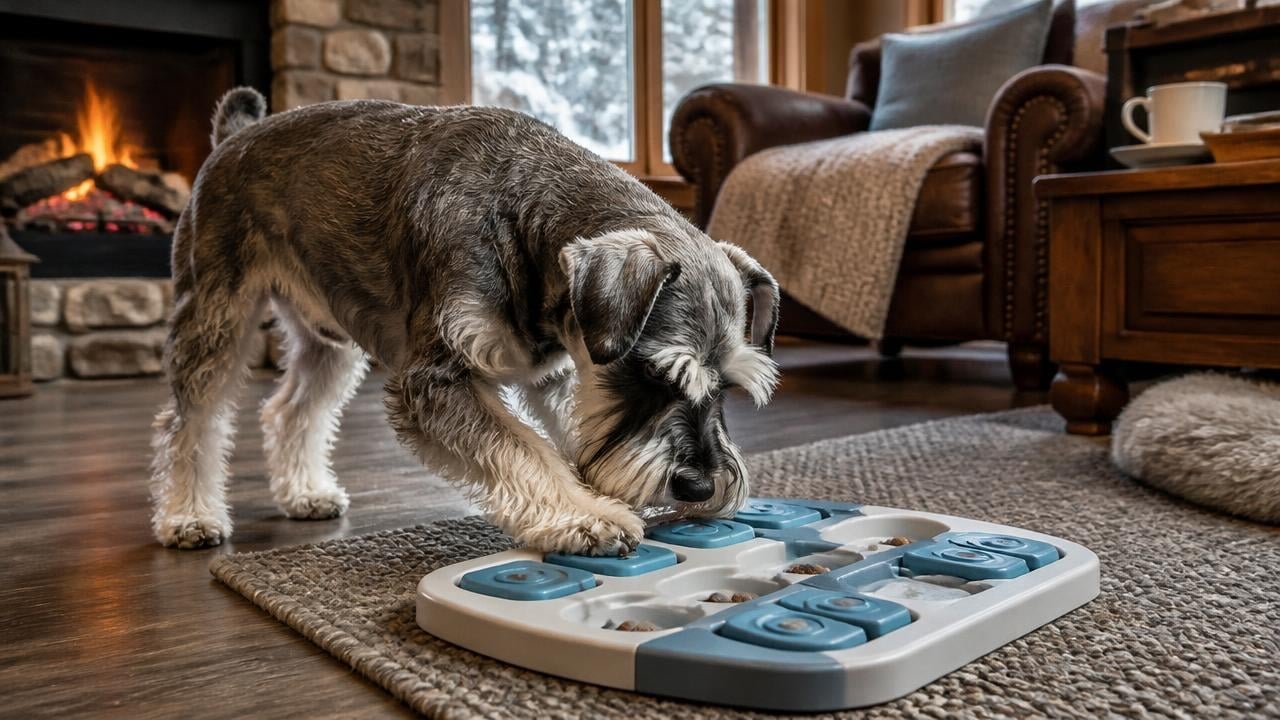
Mental activity isn’t a complete replacement for physical exercise, but it can make those days spent largely indoors much more satisfying. Remember to count food used in games and puzzles as part of your dog’s normal daily allowance.
Your Schnauzer may discover a new favorite winter activity. You might even find yourself playing it well into spring.
Is Your Schnauzer’s Favorite Sleeping Spot Warm Enough?
Get down to your dog’s level near a frequently used exterior door and you may be surprised by how much cooler it feels there.
A sleeping spot that’s perfectly comfortable in July may become rather drafty in January. Cold tile floors can also be less appealing to older dogs, particularly those that experience joint discomfort.
Consider moving your Schnauzer’s bed away from drafts and providing a washable fleece blanket or a little extra padding underneath. A well-insulated bed may be useful if your home has particularly cold floors.
Make sure a Giant Schnauzer has enough room to stretch out comfortably, rather than simply choosing the largest bed available at your local store. Smaller Schnauzers may prefer a bed with raised sides, although individual preferences vary considerably.
Of course, some dogs will disregard the thoughtfully arranged winter sleeping area in favor of an available spot on your sofa.
They have their own ideas about household comfort.
A Few Preparations Before the Next Snowfall
You don’t need to buy an entire collection of winter accessories. Much depends on your local climate, the walks you take and the individual Schnauzer sharing your home.
Here are a few things worth checking as the weather changes.
| Winter preparation | What to consider |
|---|---|
| Outdoor clothing | Does your Schnauzer have suitable protection if extra warmth is needed? |
| Paw care | Are the foot furnishings trimmed and the pads in good condition? |
| Evening walks | Can drivers and cyclists see you and your dog clearly? |
| Post-walk cleanup | Are towels and clean water readily available? |
| Indoor activities | Do you have a few enjoyable games for particularly cold days? |
| Sleeping area | Is your dog’s favorite bed comfortable and free from cold drafts? |
Check that your Schnauzer’s identification tag and microchip contact information are up to date as well. Winter storms and unfamiliar snowy surroundings can make it more difficult to locate a dog that has wandered away.
Keep fresh drinking water available throughout the winter, and don’t automatically increase your dog’s food simply because the temperatures have dropped. A Schnauzer spending more time indoors may actually be using less energy than usual.
Conclusion
Winter can bring some of the loveliest days you’ll spend with your Schnauzer. There’s something particularly endearing about those snow-covered eyebrows, the enthusiastic investigation of a freshly fallen snowbank and the contented little face that eventually settles beside you indoors.
A few sensible preparations can help keep those experiences comfortable and safe.
And whether your Schnauzer bounds out of the door at the first sight of snow or waits patiently for you to find their winter jacket, there’s no reason the colder months can’t become another enjoyable part of your life together.
This article is intended for general educational purposes and is not a substitute for veterinary diagnosis or treatment.
References and Further Reading
- Cornell University College of Veterinary Medicine — Winter Safety Tips
- American Animal Hospital Association — Frosty Walks: How to Safely Walk Your Dog in the Winter
- American Animal Hospital Association — Cold Weather Pet Safety Tips for Dogs and Cats
- ASPCA — Cold Weather Safety Tips
- American Kennel Club — Winter Care for Canines
- American Miniature Schnauzer Club — Pet Grooming Tips for the Miniature Schnauzer