Your Schnauzer has just returned from the groomer, looking particularly handsome with a beautifully trimmed, white beard. A few weeks later, you notice that familiar shade of brown creeping back into the hair around the mouth.
If only that freshly groomed look would last a little longer.
Beard staining is a frequent topic of conversation among our Schnauzer Book followers. Some owners seem to have remarkably little trouble with it, while others struggle to keep their dogs’ beards white despite regular washing and grooming.
Understanding where those stains come from can help you make a few simple changes to your Schnauzer’s everyday care.
Why Does Your Schnauzer’s Beard Turn Brown?
Much of the reddish-brown staining we see on light-colored beards can be attributed to naturally occurring substances called porphyrins. These iron-containing compounds are found in your dog’s saliva and tears.
Of course, all dogs produce saliva. Schnauzers just happen to have a rather convenient place for it to collect.
The hair around the mouth comes into contact with saliva every time your dog eats, drinks or licks their lips. Over time, that lovely white hair can take on a rusty appearance that doesn’t disappear with an ordinary bath.
Saliva isn’t the only possible culprit. Food coloring, residue from meals, dirt and possibly minerals in drinking water can all contribute to discoloration.
Sometimes several of these factors are at work together.
Take a closer look at your Schnauzer’s beard, particularly the hair and skin immediately around the mouth. You may find a few clues as to what’s going on.
| What you notice | Possible explanation |
|---|---|
| Rusty or reddish-brown hair | Porphyrins in saliva |
| Yellowish or dirty-looking hair | Food residue, dirt or accumulated staining |
| A beard that’s frequently damp | Drinking habits, beard length or excessive salivation |
| An unpleasant odor | Trapped food, dental problems or skin infection |
| Sudden staining accompanied by drooling | Possible dental disease or oral discomfort |
| Red, sore or crusty skin beneath the beard | Possible inflammation or infection |
These are clues rather than diagnoses. A beard that’s been slightly discolored for years is quite different from one that suddenly becomes wet, smelly or uncomfortable for your dog.
Take a Look at What’s in the Food Bowl
One of the first things worth investigating may have nothing to do with grooming.
Artificial coloring in some dog foods and treats may contribute to beard discoloration. Consider how much contact the hair around your Schnauzer’s mouth has with food during an ordinary meal.
We’ve noticed something interesting with our own Schnauzers over the years. When we stopped feeding them brown-colored kibble, their beards became noticeably whiter.
Was food coloring responsible? We can’t say for certain, but the improvement was enough to make us pay a little more attention to the food we were buying.
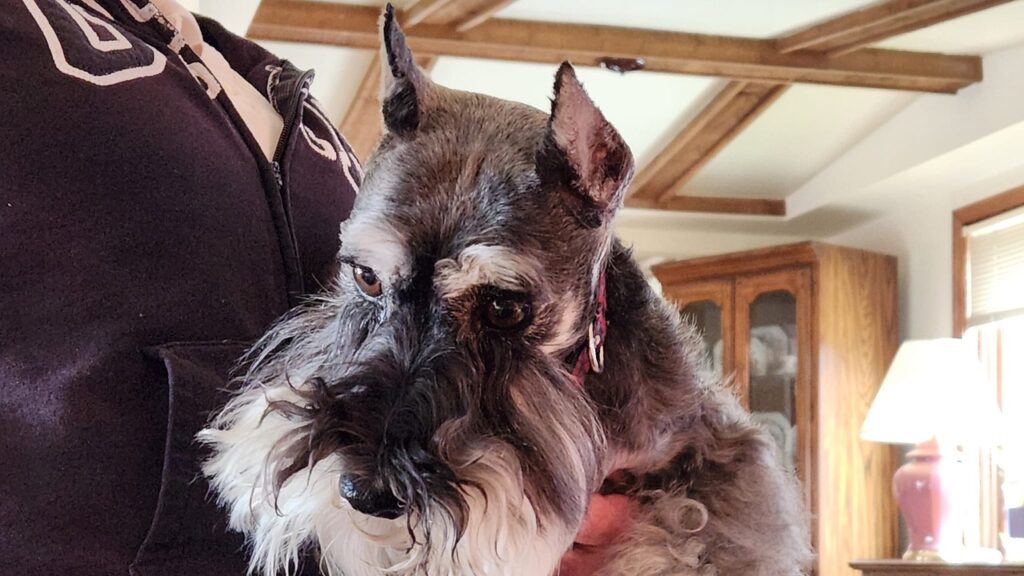
If you’ve never looked particularly closely at the ingredients in your Schnauzer’s food, now might be a good time to do so. Look for added colors such as Red 40, Yellow 5, Yellow 6 or caramel color. Don’t forget to check the treats, too.
Bear in mind that plenty of dog foods are naturally brown. The color of the kibble isn’t nearly as useful as the ingredient list when trying to determine whether coloring has been added.
If you decide to try a different food, choose a nutritionally complete and balanced formula suited to your dog and introduce it gradually. Speak with your veterinarian before changing a prescribed or special diet.
There isn’t enough scientific evidence to say that eliminating added food coloring will solve every Schnauzer’s beard-staining problem. Nevertheless, it’s something worth considering, particularly if you’ve already tried a variety of grooming products without much success.
A Little Attention After Meals
Have you ever discovered a piece of your Schnauzer’s breakfast still tucked away in the beard sometime in the afternoon?
Those lovely facial furnishings are remarkably good at collecting things.
A soft washcloth dampened with lukewarm water is usually all you need to remove food residue after a meal. Gently wipe around the mouth and chin, then blot the beard with a dry towel.
If your Schnauzer eats wet food, you’ll probably notice an immediate difference. Dry food can leave crumbs and oily residue behind, too, even when the beard doesn’t look particularly dirty.
Keep a few washable cloths near the feeding area. You’re much more likely to remember to wipe that little face if everything you need is already within reach.
The Problem With a Permanently Wet Beard
Watch your Schnauzer the next time they visit the water bowl. How much of the beard actually goes into the water?
With some dogs, it’s a wonder there’s any water left in the bowl.
There’s nothing wrong with a wet beard from time to time. But hair that remains damp for much of the day can be more difficult to keep clean, and persistent moisture close to the skin may contribute to irritation.
Keeping a small, absorbent microfiber pet towel beside the water bowl can make life a little easier. Gently blot the beard rather than rubbing it, particularly if your Schnauzer has long facial hair that tangles easily.
You don’t need to follow your dog around with a towel every time they take a drink. A little attention after those particularly enthusiastic visits to the water bowl is a reasonable place to start.
Could a Different Water Bowl Make a Difference?
If your Schnauzer regularly leaves a trail of water from the kitchen to the living room, you might want to reconsider the bowl you’re using.
Some splash-resistant water bowls incorporate a floating disk that limits the amount of water exposed at the surface. Depending on how your dog drinks, this can help keep much of the beard out of the water.
A simple stainless steel bowl is another good option if your main concern is finding something that’s easy to keep clean.
Neither bowl will stop your dog from producing porphyrins, but reducing the amount of water that soaks into the beard may make it easier to maintain a clean appearance.
If you introduce a different style of bowl, watch your Schnauzer use it. Some dogs take to a new bowl immediately, while others are rather attached to the one they’ve always used. Make sure your dog is comfortable drinking from it and continues to have unrestricted access to fresh water.
A Brighter Beard Starts at the Water Bowl
Does your Schnauzer walk away from every drink with a soaking-wet beard?
Keeping those beautiful white facial furnishings cleaner and drier is an important part of everyday beard care. A splash-resistant water bowl with a floating disk can help reduce beard saturation, making it easier to maintain that freshly groomed look.
Less soaking. Easier beard care. A cleaner-looking Schnauzer.
Get Into the Habit of Combing the Beard
Spend a few minutes combing your Schnauzer’s beard after a walk in the garden and you may be surprised by what comes out of it.
Small pieces of grass, crumbs and other bits of debris can become tangled in the hair. Leave them there long enough and you may find yourself dealing with a rather stubborn knot.
A small stainless steel grooming comb with smooth, rounded teeth is particularly useful for this part of your dog’s grooming routine. One with both wide and narrow tooth spacing can be handy.
Begin at the ends of the hair and work your way toward the roots as the tangles loosen. If you encounter a knot, hold the hair above it to avoid pulling against the skin.
Be especially careful around the corners of the mouth. If the hair has become tightly matted, let your groomer deal with it rather than trying to force a comb through it.
A few minutes of gentle combing while your Schnauzer is relaxing beside you can become a pleasant little routine for both of you.
The Beard Doesn’t Have to Wait Until Bath Day
The rest of your Schnauzer may look perfectly clean while the beard is clearly ready for a wash.
The American Miniature Schnauzer Club addresses this in its grooming recommendations, suggesting that the beard be washed as needed between regular baths.
There’s no reason to put your entire dog in the bathtub just to clean the hair around the mouth.
Start by gently combing out any tangles. Wet the beard with lukewarm water and wash it with a mild canine shampoo suitable for facial use, following the manufacturer’s directions. Take care to keep shampoo away from the eyes, nose and inside of the mouth.
Rinse thoroughly and blot the beard dry with a clean towel.
How often should you do this? Much depends on your individual Schnauzer, what they eat and how they spend their day. Avoid washing so frequently that the skin becomes dry or irritated.
For ordinary cleaning after meals, a damp cloth will often do the job quite nicely.
What About Beard-Whitening Shampoos?
A quick look at the grooming products available for white dogs reveals an impressive number of shampoos, powders and wipes promising brighter coats.
Some whitening shampoos can improve the appearance of light-colored hair by removing surface residue or using color-enhancing ingredients. Established saliva stains, however, can be considerably more difficult to remove.
Remember where you’re going to be using the product. A shampoo that’s perfectly suitable for the hair on your dog’s back isn’t necessarily something you’d want around the lips.
Check that the manufacturer specifically permits facial use and follow the directions carefully.
You’ll also encounter plenty of homemade beard-whitening remedies online. We’d recommend avoiding the following:
- Hydrogen peroxide.
- Household bleach or human hair bleach.
- Baking soda pastes.
- Lemon juice or concentrated vinegar.
- Human whitening toothpaste.
- Essential oil mixtures.
These can irritate the skin, damage the hair or cause problems if swallowed or introduced into the eyes.
It’s easy to become a little frustrated when that brown discoloration refuses to disappear. But a stained beard is certainly preferable to a sore one.
Is Your Tap Water Part of the Problem?
Filtered water is another suggestion that comes up frequently when Schnauzer owners discuss beard staining.
If you live in an area with hard water, you may already be familiar with the mineral deposits it leaves around your faucets. It’s reasonable to wonder whether some of those minerals might also be left behind on your dog’s beard.
Appropriately filtered water may reduce certain mineral residues, depending on the type of filter used. There isn’t much evidence, however, that switching to filtered or distilled water reliably prevents the reddish-brown stains caused by porphyrins.
If your household already uses filtered drinking water, there’s no reason your Schnauzer can’t enjoy it, too. We wouldn’t suggest buying an expensive filtration system solely in the hope of producing a whiter beard.
Whatever water your dog drinks, remember to wash the bowl regularly and replenish it with fresh water.
Don’t Forget to Look Behind the Beard
When was the last time you took a good look at your Schnauzer’s teeth and gums?
Dental problems, inflamed gums and other uncomfortable conditions inside the mouth can cause a dog to produce more saliva. That extra saliva has to go somewhere, and much of it may end up in the beard.
Persistent bad breath, bleeding gums, dropping pieces of food while eating or a reluctance to chew are all worth investigating.
Regular brushing with a toothpaste formulated for dogs, when tolerated, is a useful part of home dental care. Your veterinarian can help you establish a suitable routine and determine whether professional cleaning is needed.
If your Schnauzer’s beard has suddenly become darker, wetter or more unpleasant-smelling than usual, don’t assume that a change in grooming products is the answer.
Will an Already Stained Beard Ever Be White Again?
Much depends on what’s causing the discoloration and how long it’s been there.
Food residue and ordinary dirt may wash out quite readily. Hair that’s been repeatedly exposed to saliva over a period of months can be a different matter.
Sometimes the best approach is to concentrate on keeping the new hair as clean as possible while the older, stained hair gradually grows out. Your groomer can trim away the discolored ends over successive visits without sacrificing that distinctive Schnauzer beard.
Give changes in food and grooming habits a little time before deciding whether they’re making a difference.
You may find it helpful to take a photograph of your Schnauzer’s beard now and compare it with another taken several weeks later under similar lighting. Gradual improvements aren’t always obvious when you’re looking at the same little face every day.
A Simple Beard-Care Routine
You don’t need to do everything we’ve discussed every day. Start with a few habits that fit comfortably into your household routine.
| When | What to do |
|---|---|
| When choosing food and treats | Check the ingredients for added coloring. |
| After meals | Wipe away visible food residue. |
| After particularly messy drinks | Blot excess water from the beard. |
| Daily or as needed | Gently comb out tangles and debris. |
| Daily | Wash the food and water bowls. |
| Between baths, as needed | Wash the beard with a suitable canine shampoo. |
| During regular grooming | Have your groomer check for matting and tidy stained ends. |
Some Schnauzers seem to maintain a lovely white beard with remarkably little assistance. Others require a bit more help from their people.
You’ll soon discover which sort you’ve got.
When Beard Staining Deserves a Visit to the Veterinarian
Most longstanding beard discoloration in an otherwise comfortable, healthy dog is primarily a cosmetic concern. But it’s worth paying attention when something changes.
Speak with your veterinarian if you notice any of the following:
- A sudden increase in drooling.
- A persistent foul odor.
- Red, swollen or painful skin around the lips.
- Bleeding gums or sores inside the mouth.
- Unusual discharge or crusting.
- Repeated rubbing or scratching around the mouth.
- Difficulty eating or chewing.
Your dog may have a dental problem, skin infection or another condition that needs treatment rather than more frequent washing.
Conclusion
If keeping your Schnauzer’s beard white has been a bit of a struggle, try looking at the food you’re feeding, the water bowl you’re using and what happens to the beard between visits to the groomer.
You may discover that a few relatively simple changes make more difference than another bottle of whitening shampoo.
And don’t be too disappointed if that beard never looks quite as white as you’d like. A Schnauzer who enjoys investigating the garden, sharing your adventures and making the most of every mealtime is probably going to collect a little evidence along the way.
After all, some of our favorite Schnauzer faces have never had particularly white beards.
This article is intended for general educational purposes and is not a substitute for veterinary diagnosis or treatment.
References and Further Reading
- American Miniature Schnauzer Club — Pet Grooming Procedures
- American Kennel Club — Why Does My Dog’s Fur Turn Pink or Brown?
- PDSA — Saliva Staining and Overgrooming in Dogs
- Preventive Vet — Tear and Fur Staining
- VCA Animal Hospitals — Dental Disease in Dogs
- Merck Veterinary Manual — Disorders of the Mouth in Dogs
- Chewy — Cleaning a Dog’s Beard Stains